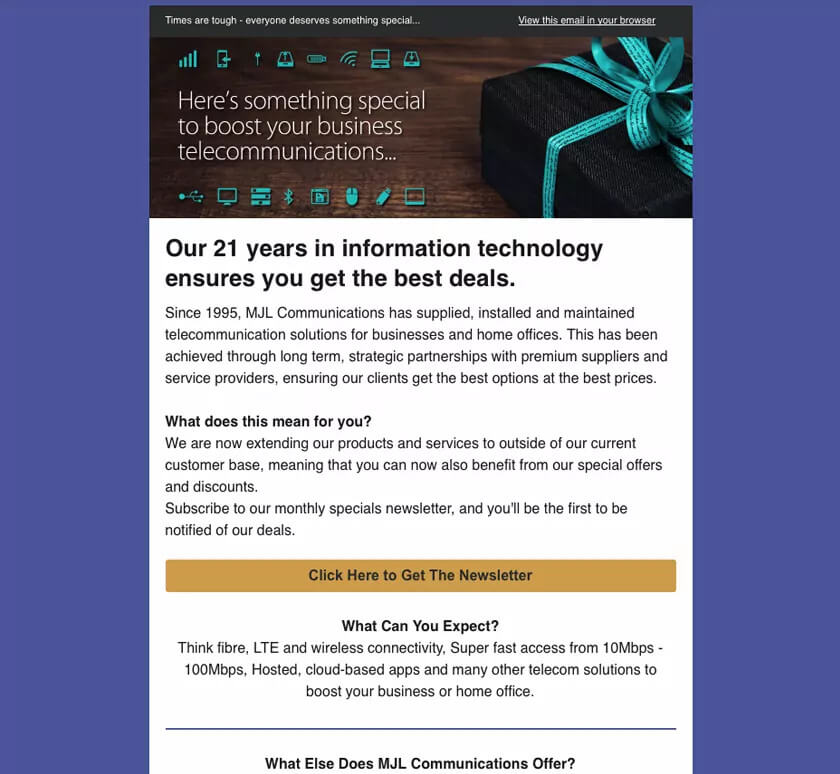
Email marketing in 2024 is still a very viable option for businesses looking to make personal connections with existing, and more specifically, potential customers.
Being “out of sight“, means “out of mind“… so, if done right, email is a valuable channel to remind customers that you’re still open for business. It also serves to alert them to add-on services, new products or special offers that are applicable only to them and, incentivises them to share your content in order to grow your audience.
Approximately 65% of repeat business globally is generated from existing customers, so it’s essential to look after, communicate with, provide exclusive offers and thank customers for their patronage.
First-party data refers to information collected directly by a company from its own customers or users. This data is typically obtained through interactions, transactions, and engagements with the company’s products, services, websites, or other platforms. Since it originates from the company’s own sources, first-party data is considered highly valuable and reliable.
First-party data is crucial for businesses as it enables them to understand their customers better, tailor their marketing strategies, improve products or services, and enhance overall customer experiences. Additionally, first-party data is considered more reliable and trustworthy than third-party data, which is obtained from external sources.
Email marketing examples. Click to enlarge.
First-party data has become increasingly prevalent for several reasons, driven by shifts in consumer behavior, technological advancements, and changes in the regulatory landscape. Here are some key factors contributing to the rise of first-party data:
Data Privacy Concerns: Growing concerns about data privacy have led to increased scrutiny of third-party data practices. High-profile data breaches and the implementation of regulations such as the POPI Act, General Data Protection Regulation (GDPR) and the California Consumer Privacy Act (CCPA) have prompted businesses to prioritise the use of their own first-party data, collected with explicit consent.
Customer-Centric Marketing: Modern marketing strategies emphasise a customer-centric approach. First-party data allows businesses to better understand their customers, personalise interactions, and tailor marketing messages to individual preferences. This focus on customer experience has driven the importance of leveraging first-party data.
Digital Transformation: The digital transformation of businesses has led to an increase in online interactions and transactions. Companies are collecting more data directly from their digital touchpoints, including websites, mobile apps, and social media platforms. This shift has resulted in a larger volume of first-party data being generated.
Rise of E-commerce: The growth of e-commerce has provided businesses with more opportunities to collect first-party data through online transactions, customer registrations, and website interactions. E-commerce platforms have become significant sources of valuable customer information.
Personalisation Trends: Consumers now expect personalised experiences across various touchpoints. First-party data enables businesses to deliver personalised content, recommendations, and offers, which can lead to higher customer satisfaction and engagement.
Ad Blocking and Ad Fatigue: Ad blocking software and ad fatigue have made it challenging for businesses to rely solely on third-party data for targeted advertising. First-party data allows companies to create more relevant and less intrusive advertising experiences for their audience.
Regulatory Compliance: Adherence to data protection regulations has become a critical consideration for businesses. Using first-party data, collected with explicit consent, helps ensure compliance with privacy laws and regulations, reducing the risk of legal issues and fines.
Trust Building: With increasing awareness of data breaches and privacy violations, consumers are becoming more cautious about sharing their information. Building trust with customers is crucial, and using first-party data collected transparently fosters a sense of trust and credibility.
Overall, the prevalence of first-party data is a response to evolving consumer expectations, regulatory changes, and the need for businesses to adapt their data practices to align with privacy-conscious and customer-centric approaches for email marketing in 2024.
There are discussions and developments in the tech industry regarding privacy concerns and the potential phase-out of third-party cookies.
The concerns surrounding cookies were primarily related to privacy issues, user tracking, and the gathering of personal information without explicit consent. In response to these concerns, major web browsers and regulatory bodies started to take measures to enhance user privacy and control over their data.
Here are some reasons why cookies might be phased out or face significant changes in the near future:
Google has announced plans to phase out third-party cookies in their Chrome browser and introduced initiatives like the Privacy Sandbox to explore alternative approaches to online advertising.
Cookies are small pieces of data that websites store on a user’s device (such as a computer or a smartphone) through the web browser. These pieces of data are designed to remember information about the user, their preferences, and their interactions with the website. Cookies play a crucial role in enhancing the user experience on the web.
Here are some key points about cookies:
First-Party and Third-Party Cookies:
Custom Audiences:
Retargeting Campaigns:
Lookalike Audiences:
Dynamic Ads:
Exclusive Offers for Existing Customers:
Cross-Channel Consistency:
Behavioral Targeting:
Email marketing in 2024 (Integration):
Leveraging first-party data recipients involves strategically using your existing data to encourage the growth of your first-party data set. Here are some effective strategies to achieve this:
Customer Engagement and Interaction:
Incentives and Exclusive Offers:
Progressive Profiling:
Personalised Experiences:
User Account Creation:
Social Media Integration:
Referral Programs:
Transparency and Trust:
Cross-Channel Consistency:
Educational Campaigns:
Email marketing with first-party data is essential for businesses in 2024 and beyond as it enables personalised, targeted, and compliant communication, fostering trust and delivering measurable results in an era of increasing privacy concerns and regulatory scrutiny.